
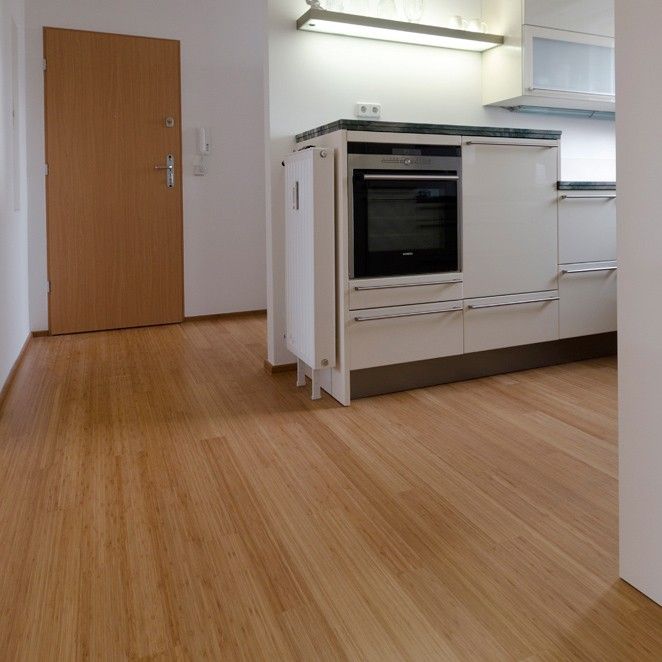
Interior design is often a game of lines and light. When architects and designers set out to create a modern space, the goal is usually to reduce visual noise and emphasize the structural integrity of the environment. In this pursuit, the choice of flooring acts as the anchor. While traditional hardwoods with their swirling grains and knots can feel rustic or ornate, vertical bamboo flooring has emerged as the definitive choice for the modern aesthetic. It offers a unique combination of geometric precision, a minimalist color palette, and a sustainable story that resonates with contemporary values.
To understand why this specific material is so effective at creating a sleek look, one must look at the intersection of its physical construction and the psychological impact of its linear patterns.
The Geometry of Vertical Construction
The "sleekness" of vertical bamboo is a direct result of how it is made. Unlike horizontal bamboo, where the strips are laid flat to show the wide grain and the "knuckles" or growth nodes of the stalk, vertical bamboo is turned on its side. The thin strips are stood up vertically and then bonded together under immense pressure.
This process hides the organic irregularities of the bamboo plant. Instead of the varied, somewhat busy look of traditional wood, you are left with a series of very thin, parallel lines. This creates a "pinstriped" effect that is remarkably consistent across the entire floor. In a modern home, where the goal is often to create a sense of order and cleanliness, this geometric regularity is a powerful tool. It provides a texture that is interesting enough to avoid looking like plastic or laminate, but subtle enough to prevent the floor from competing with the room’s furniture or artwork.
Linear Flow and Spatial Perception
One of the hallmarks of modern design is the use of long, uninterrupted lines to guide the eye. Vertical bamboo is perhaps the most "linear" natural flooring material available. Because the grain is so tight and consistent, the seams between the individual bamboo strips almost disappear into the grain itself.
When these planks are installed, they create a visual "flow" that can be used to manipulate the perception of space. In a narrow hallway or a compact living room, the long, thin lines of vertical bamboo act like arrows, drawing the eye toward the windows or the far wall. This "stretching" effect makes a room feel more expansive and purposeful. A modern space should never feel cluttered; by using a floor that emphasizes length and direction, you reinforce the feeling of openness that defines the contemporary home.
The Power of a Controlled Color Palette
Modernism often relies on a restrained color palette to create a sense of sophistication. Vertical bamboo naturally lends itself to this approach because it lacks the heavy color variations found in woods like hickory or acacia.
In its natural state, vertical bamboo is a pale, creamy blonde. This light-toned wood is a staple of Scandinavian and "Japandi" (a fusion of Japanese and Scandinavian) design. It reflects a massive amount of ambient light, making a room feel bright and airy even on overcast days.
When carbonized—a process where the bamboo is steamed to darken its internal sugars—vertical bamboo takes on a warm caramel or honey tone. Even in this darker state, the color remains remarkably uniform. This uniformity is essential for a sleek look. When the floor is one consistent shade, it acts as a neutral canvas. It allows a bold, architectural sofa or a piece of vibrant modern art to stand out without the floor "fighting" for attention.
A Texture That Complements Modern Materials
Modern homes often feature a high concentration of "hard" materials: glass walls, stainless steel appliances, concrete countertops, and smooth lacquered cabinetry. While these materials are beautiful, they can sometimes make a home feel cold or industrial.
Vertical bamboo provides the perfect textural counterpoint. It is a natural material, which brings an inherent warmth and "soul" to a room, but its pinstriped grain is structured enough to feel right at home alongside a steel-frame window or a quartz island. It provides what designers call "organic modernism"—a way to include nature in a room without sacrificing the clean, sharp edges that modernists love. The fine texture of the vertical grain mimics the look of high-end architectural veneers, giving the floor a furniture-quality finish that looks expensive and intentional.
The "Quiet" Floor: Visual and Acoustic Order
A sleek look isn't just about what you see; it’s about the overall sensory experience of the room. A room that looks modern but feels noisy and chaotic will never achieve that sense of sleek sophistication.
Visually, vertical bamboo is a "quiet" floor. Because it lacks the high-contrast knots and heavy "cathedral" graining of oak, it doesn't create visual vibration. This allows the brain to relax and focus on the architecture of the space.
Acoustically, vertical bamboo is also quite impressive. Because the strips are bonded on their edges under high pressure, the material is incredibly dense. This density helps to dampen the sound of footsteps. When paired with a high-quality underlayment, vertical bamboo provides a solid, muffled sound that contributes to the serene, hushed atmosphere of a high-end modern home. It eliminates the "clicky" sound often associated with thinner laminates or floating floors, replacing it with a substantial, high-quality feel underfoot.
Sustainability as a Design Choice
In the mid-2020s, "sleek" and "modern" are inextricably linked with sustainability. A home that is beautiful but environmentally destructive is increasingly seen as dated. Bamboo is one of the fastest-growing plants on earth, reaching maturity in five to seven years, compared to thirty to fifty years for a hardwood tree.
Choosing vertical bamboo allows a homeowner to achieve a luxury look with a clear conscience. This "moral" sleekness is part of the modern design ethos. The fact that the floor is made from a rapidly renewable grass adds a layer of intellectual depth to the design. It is a material that looks toward the future, aligning perfectly with the forward-thinking nature of modern architecture.
Seamless Integration with Minimalist Trim
In traditional homes, floors are often framed by heavy, ornate baseboards and crown moldings. In a sleek modern space, the goal is often to minimize these transitions.
Vertical bamboo is particularly well-suited for "flush" installations. Because the planks are so dimensionally stable, they can often be installed with very small expansion gaps that are then hidden by slim, minimalist baseboards or even recessed "shadow-gap" trims. The fine, vertical grain looks exceptional when it runs right up to a clean wall edge without the need for bulky quarter-round moldings. This seamless transition from floor to wall is the hallmark of a high-end architectural finish.
Versatility in Open-Plan Living
Modern homes almost always feature open-plan layouts where the kitchen, dining, and living areas flow into one another. To maintain a sleek look in these large spaces, you need a flooring material that can "do it all."
Vertical bamboo is tough enough for the kitchen but warm and inviting enough for the living room. By using the same vertical bamboo across the entire floor plate, you eliminate the visual "speed bumps" created by transition strips between different materials. This continuity is vital for a modern aesthetic. It creates a unified, cohesive environment that feels like a single, well-thought-out piece of design rather than a collection of separate rooms.
Enhancing Natural and Artificial Lighting
A sleek room relies heavily on lighting to define its shapes. Vertical bamboo acts as a sophisticated light-management system.
In the daytime, the fine lines of the grain catch the light at different angles, creating a subtle, shimmering effect that adds depth to the floor without creating glare. At night, under recessed LED lighting or pendant lamps, the consistent color of the vertical bamboo ensures that shadows are soft and predictable. It doesn't create the "patchy" look that highly variegated woods can produce under artificial light. This allows for very precise control over the room’s evening mood, ensuring the space remains sleek and inviting long after the sun goes down.
The Durability of Modern Engineering
Finally, a floor can only look sleek if it stays in good condition. A scratched, warped, or gapping floor quickly ruins the modern aesthetic. Vertical bamboo is one of the most stable flooring options available.
Because the strips are bonded together in a vertical orientation, the planks have incredible lateral strength. They are much less likely to "cup" or "gap" than solid wood planks. This means that years after installation, the floor will still have the same flat, seamless appearance it had on day one. Furthermore, most vertical bamboo is finished with multiple layers of high-tech, UV-cured polyurethane, ensuring that the sleek surface remains resistant to the scuffs and scratches of daily life.
The Aesthetic of the Future
Vertical bamboo is more than just a flooring material; it is a design strategy. It takes the raw, chaotic beauty of the natural world and organizes it into a clean, linear, and predictable format that perfectly matches the goals of modern architecture. It provides the warmth of nature, the precision of a machine-made product, and the peace of mind that comes with a sustainable choice.
Whether you are designing a high-rise urban loft or a minimalist suburban retreat, vertical bamboo flooring provides the foundational lines that turn a simple room into a sleek, sophisticated environment. It is a floor that doesn't just sit in the background; it actively works to define the space, stretching the horizons and reflecting the light, all while maintaining a quiet, understated elegance that never goes out of style.